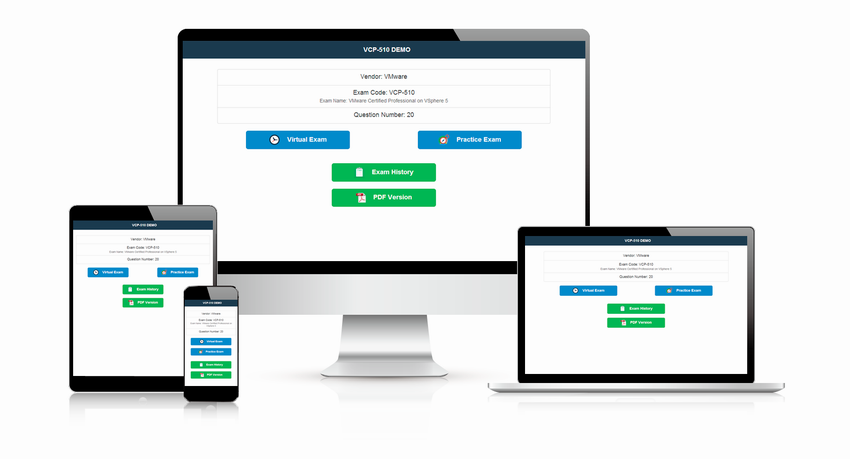
The online engine does not care where you are: download the DEA-C01 version once while connected, and Test4Cram lets you study offline from that point forward — a feature our phone-first candidates lean on constantly.
Snowflake DEA-C01 Exam Overview:
| Certification Vendor: | Snowflake |
|---|---|
| Exam Name: | SnowPro Advanced: Data Engineer Certification Exam |
| Exam Number: | DEA-C01 |
| Exam Price: | $375 USD |
| Exam Duration: | 115 minutes |
| Exam Format: | Multiple select, Multiple choice, Scenario-based questions |
| Available Languages: | English |
| Real Exam Qty: | Approximately 65 questions |
| Related Certifications: | SnowPro Core Certification |
| Passing Score: | Not publicly disclosed (Snowflake uses scaled scoring) |
| Certificate Validity Period: | 2 years |
| Recommended Training: | Snowflake University Training SnowPro Advanced Data Engineer Exam Guide |
| Exam Registration: | Snowflake Certification Portal |
| Sample Questions: |  |
| Exam Way: | Online proctored or authorized testing center |
| Pre Condition: | Recommended: SnowPro Core Certification or equivalent Snowflake experience |
| Official Syllabus URL: | https://www.snowflake.com/certifications/snowpro-advanced-data-engineer/ |
Snowflake DEA-C01 Exam Syllabus Topics:
| Section | Objectives |
|---|---|
| Data Pipelines and Transformation | - ETL/ELT design patterns in Snowflake
|
| Performance Optimization | - Warehouse optimization
|
| Semi-Structured and Advanced Data Handling | - Semi-structured data processing
|
| Data Loading and Integration | - Bulk data loading
|
| Data Engineering Fundamentals on Snowflake | - Snowflake architecture for data engineering
|
| Security, Governance, and Data Sharing | - Access control
|
Snowflake SnowPro Advanced: Data Engineer Certification Questions Buyers Commonly Ask
- Data Engineering Fundamentals on Snowflake ()
- Data Pipelines and Transformation ()
- Performance Optimization ()
Snowflake SnowPro Advanced: Data Engineer Certification Sample Questions:
A company is developing a log streaming pipeline that uses Amazon Data Firehose. The pipeline streams Amazon CloudWatch Logs data to an Amazon S3 bucket. The company's analytics team needs to use the data in audits. The pipeline must deliver only the relevant logs to the S3 bucket in a compatible format for the team's analysis. Which solution will meet these requirements and maintain reliable performance?
- A. Set the S3 bucket rules to allow logs from only specific timestamp ranges. Create an AWS Lambda function that converts the log files to the desired format. Use an S3 trigger to invoke the Lambda function.
- B. Create a subscription filter in the CloudWatch Logs log group that uses the Firehose delivery stream as the destination. Create an AWS Lambda function that converts the log files to the desired format. Configure Firehose to invoke the Lambda function.
- C. Create a subscription filter in the CloudWatch Logs log group. Configure the filter to monitor the Firehose stream. Create an AWS Lambda function to convert the log files to the desired format.
Configure Firehose to invoke the Lambda function. - D. Tag the CloudWatch Logs log groups that the analytics team needs. Configure Firehose to ingest only the tagged log groups. Configure Firehose to write the output in the desired format.
Correct Answer: B 🗳️
Explanation: Only visible for Test4Cram members. You can sign-up / login (it's free).
A data engineer needs to create an empty copy of an existing table in Amazon Athena to perform data processing tasks. The existing table in Athena contains 1,000 rows.
Which query will meet this requirement?
- A. CREATE TABLE new_table
as SELECT *
FROM old_cable
WHERE 1=1; - B. CREATE TABLE new_table
LIKE old_table; - C. CREATE TABLE new_table
AS SELECT *
FROM old_table; - D. CREATE TABLE new_table
AS SELECT *
FROM old_table
WITH NO DATA;
Correct Answer: D 🗳️
A company's application needs to search and analyze data in near real time. The application must handle up to 1,000 requests each second with low query latency. The company wants a solution that individual data teams can own and configure to meet each team's cost and performance optimization requirements. Which solution will meet these requirements?
- A. Use Amazon OpenSearch Service clusters with indexing to query the data. Assign each data team a separate cluster to configure for storage and queries.
- B. Use streams in Amazon Kinesis Data Streams and Amazon Managed Service for Apache Flink to query and analyze the data. Assign each data team a separate stream to manage and consume.
- C. Use Amazon Aurora clusters that run on Aurora I/O-Optimized instances. Assign each data team a separate Aurora cluster to configure for storage and queries.
- D. Use Amazon S3 buckets to store the data. Use Amazon Athena to query and analyze the data.
Assign each data team a separate S3 bucket prefix to optimize queries.
Correct Answer: A 🗳️
Explanation: Only visible for Test4Cram members. You can sign-up / login (it's free).
A data engineer runs Amazon Athena queries on data that is in an Amazon S3 bucket. The Athena queries use AWS Glue Data Catalog as a metadata table.
The data engineer notices that the Athena query plans are experiencing a performance bottleneck. The data engineer determines that the cause of the performance bottleneck is the large number of partitions that are in the S3 bucket. The data engineer must resolve the performance bottleneck and reduce Athena query planning time.
Which solutions will meet these requirements? (Choose two.)
- A. Use the Amazon EMR S3DistCP utility to combine smaller objects in the S3 bucket into larger objects.
- B. Create an AWS Glue partition index. Enable partition filtering.
- C. Transform the data that is in the S3 bucket to Apache Parquet format.
- D. Bucket the data based on a column that the data have in common in a WHERE clause of the user query.
- E. Use Athena partition projection based on the S3 bucket prefix.
Correct Answer: B,E 🗳️
Explanation: Only visible for Test4Cram members. You can sign-up / login (it's free).
A company runs concurrent analytical queries on Amazon Redshift tables multiple times each day. The queries require consistent data views three times each day. The company runs extract, transform, and load (ETL) operations that update dimension tables while the queries run.
The company has noticed that the queries cause table-level locks during the ETL operations. The company's current solution experiences query timeouts and deadlocks during peak processing hours, which affects analytical reporting and on-demand analysis.
Which solution will fix this issue?
- A. Deploy separate Amazon Redshift clusters for ETL and analytics workloads. Use cross-database queries and data sharing to maintain data consistency.
- B. Use Amazon Redshift materialized views for analytical queries. Schedule ETL operations during off-peak hours to minimize lock contention.
- C. Use Amazon Redshift Spectrum to query data in Amazon S3 for analytical workloads. Maintain ETL operations on Amazon Redshift tables with transaction isolation.
- D. Configure Amazon Redshift federated queries to access source data directly. Use read replicas to isolate analytical workloads from ETL operations.
Correct Answer: A 🗳️
Explanation: Only visible for Test4Cram members. You can sign-up / login (it's free).
Viewing page 1 out of 78 pages.
Viewing questions 1-5 out of 387 questions.