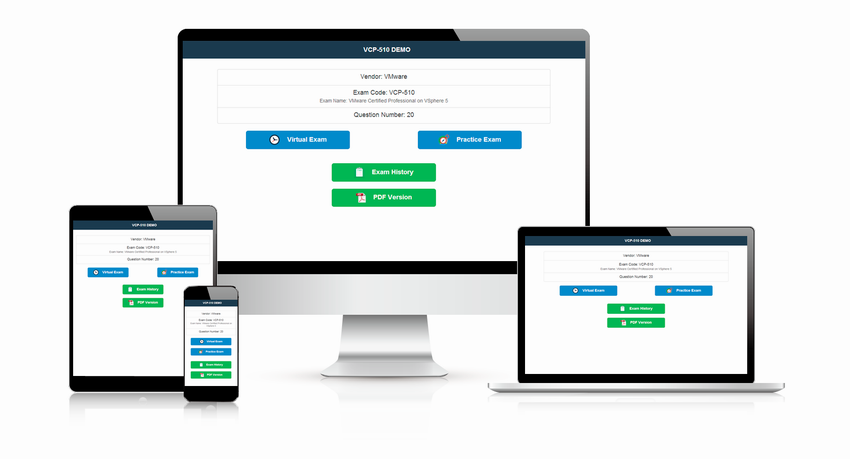
Many candidates who eventually earn the PECB ISO 31000 Lead Risk Manager credential failed their first try — what changed the outcome for them was switching to a smarter preparation method. Test4Cram supports that switch with 82 verified practice questions for the ISO-31000-Lead-Risk-Manager exam and three study formats to match how you learn best.
PECB ISO-31000-Lead-Risk-Manager Exam Overview:
| Certification Vendor: | PECB |
|---|---|
| Exam Name: | PECB Certified ISO 31000 Lead Risk Manager Exam |
| Exam Number: | ISO-31000-Lead-Risk-Manager |
| Exam Format: | Open book, Scenario-based, Multiple choice |
| Real Exam Qty: | 80 |
| Certificate Validity Period: | 3 years |
| Exam Duration: | 180 minutes |
| Related Certifications: | PECB Certified ISO 31000 Risk Manager PECB Certified ISO 31000 Foundation PECB Certified ISO 31000 Senior Lead Risk Manager |
| Exam Price: | $1000 USD |
| Available Languages: | Arabic, English, Russian, French, Spanish, Italian, Chinese, Portuguese, German |
| Passing Score: | 70% |
| Recommended Training: | PECB Accredited Training Providers |
| Exam Registration: | PECB Official Registration |
| Sample Questions: |  |
| Exam Way: | Online proctored or onsite at accredited examination centers |
| Pre Condition: | Five years of professional experience, including at least two years in risk management activities; minimum 300 hours of practical risk management work; recommended completion of accredited ISO 31000 Lead Risk Manager training |
| Official Syllabus URL: | https://pecb.com/en/education-and-certification-for-individuals/iso-31000/iso-31000-lead-risk-manager |
PECB ISO-31000-Lead-Risk-Manager Exam Syllabus Topics:
| Section | Weight | Objectives |
|---|---|---|
| Topic 1: Initiating the risk management process and risk assessment | 25% | - Risk analysis: likelihood, impact, and level determination - Defining scope, context, and risk criteria - Application of ISO 31010 risk assessment techniques - Risk evaluation and prioritization - Risk identification methods and techniques |
| Topic 2: Fundamental principles and concepts of risk management | 15% | - Principles of risk management according to ISO 31000 - Relationship between risk management and organizational objectives - Key concepts, definitions, and terminology |
| Topic 3: Risk communication and consultation | 5% | - Consultation throughout the risk management process - Communication strategies and stakeholder engagement |
| Topic 4: Risk recording and reporting | 10% | - Reporting to stakeholders and decision-makers - Documentation requirements and records management |
| Topic 5: Risk treatment | 15% | - Development and implementation of treatment plans - Selection of risk treatment options - Assessment and acceptance of residual risks |
| Topic 6: Risk monitoring and review | 10% | - Internal and external review processes - Continuous improvement of risk management - Monitoring performance and effectiveness |
| Topic 7: Establishing the risk management framework | 20% | - Governance, accountability, and resources - Integration of risk management into organizational processes - Design and implementation of the framework - Leadership and commitment |
Common Questions from Retake Candidates
Five years of professional experience, including at least two years in risk management activities; minimum 300 hours of practical risk management work; recommended completion of accredited ISO 31000 Lead Risk Manager training
You can confirm the current eligibility requirements on the official ISO-31000-Lead-Risk-Manager exam page before you register.
The PECB ISO 31000 Lead Risk Manager exam contains 80 questions, and you will have 180 minutes minutes to complete them. Practicing under the same time pressure is one of the most effective ways to prepare for a retake.
Each of the three versions — PDF, PC test engine, and online test engine — has its own strengths, and the fastest way to find your fit is to try them. Free demos are available for every version, so download each one and compare how the questions, layout, and testing modes feel before you commit.
Our prices are listed openly on the website, and we run discount promotions during special activities throughout the year. Because promotion dates are not fixed, contact our staff to ask about the current activity schedule — they will tell you exactly when the next discount window opens.
The PECB ISO 31000 Lead Risk Manager practice questions are organized around the official exam objectives. Key topics include:
- Risk recording and reporting (10%)
- Risk treatment (15%)
- Initiating the risk management process and risk assessment (25%)
Studying topic by topic helps you find the weak areas that cost you points last time.
Many candidates combine practice questions with official training. Recommended options include:
This package includes 82 practice questions for the PECB ISO 31000 Lead Risk Manager exam, with verified answers reviewed by an experienced team of IT experts and certified professionals.
You can register for the PECB ISO 31000 Lead Risk Manager exam through the official channels:
The PECB ISO 31000 Lead Risk Manager exam requires a score of 70% to pass, and the official registration fee is $1000 USD. Retake candidates should budget for both the exam fee and a preparation tool that is actually worth the money.
PECB ISO 31000 Lead Risk Manager Sample Questions:
What is one of the primary purposes of maintaining records in risk management?
- A. To provide confidence that all risks are completely eliminated
- B. To communicate information about risks to decision makers only
- C. To replace the need for monitoring and review
- D. To track risk management performance and provide an audit trail for verification
Correct Answer: D 🗳️
Explanation: Only visible for Test4Cram members. You can sign-up / login (it's free).
Scenario 7:
Maxime, a chocolate manufacturer headquartered in Ghent, Belgium, produces toffees, eclairs, enrobed chocolates, and caramels. In 2023, a contamination incident in its caramel line triggered a large-scale product recall across Europe, exposing weaknesses in supplier evaluation, reporting channels, and crisis communication. Recognizing the financial, operational, and reputational impact of this event, top management decided to apply a risk management process in line with ISO 31000. The aim was to strengthen resilience, embed risk awareness across departments, and ensure risks are systematically managed in both daily operations and long-term strategies.
To ensure that the risk management process is effective, Maxime set up a structured monitoring and review process with clear procedures for collecting and analyzing data on key risks like supplier reliability, food safety, and communication. For validation of measurement methods, Sophie, the head of Quality Assurance, was tasked with assessing whether the tools used were suitable for evaluating the effectiveness of the process.
Additionally, Maxime introduced a set of measures designed to provide early warning indicators across critical areas. In operations, they tracked the number of production line stoppages and the percentage of defective batches. On the financial side, they monitored fluctuations in raw material prices, especially cocoa, and their impact on margins. For regulatory matters, they followed the frequency of nonconformities identified during inspections. In terms of technology, system downtime in automated packaging lines was measured.
To ensure these indicators were communicated effectively, Sophie worked with top management to present the results in a format that made changes easy to spot and understand. Rather than relying only on static reports, they chose a more dynamic approach that displayed key values visually, highlighted deviations, and issued alerts when thresholds were crossed.
In addition, Maxime established clear communication and consultation processes to ensure that relevant stakeholders were properly engaged. The top management used an approach that clarified who was responsible for carrying out tasks, who held final accountability, who should be consulted for expertise, and who needed to stay informed. To strengthen engagement, Maxime organized how risk information would be delivered to different audiences. Employees received updates during team briefings and through the company's internal platform, while external parties, such as suppliers and regulators, were informed through formal reports and direct correspondence. This approach ensured that each group had access to the information most relevant to them in a timely way.
Based on the scenario above, answer the following question:
According to Scenario 7, what reporting method did the top management and Sophie decide to use to communicate warning signals effectively?
- A. Operational
- B. Gauges
- C. Narrative reports
- D. Tactical
Correct Answer: B 🗳️
Explanation: Only visible for Test4Cram members. You can sign-up / login (it's free).
Scenario 6:
Trunroll is a fast-food chain headquartered in Chicago, Illinois, specializing in wraps, burritos, and quick-serve snacks through both company-owned and franchised outlets across several states. Recently, the company identified two major risks: increased dependence on third-party delivery platforms that could disrupt customer service if contracts were to fail or fees rose sharply, and stricter health and safety inspections that might expose vulnerabilities in hygiene practices across certain franchise locations. Therefore, the top management of Trunroll adopted a structured risk management process based on ISO 31000 guidelines to systematically identify, assess, and mitigate risks, embedding risk awareness into daily operations and strengthening resilience against future disruptions.
To address these risks, Trunroll outlined and documented clear actions with defined responsibilities and timelines. Regarding the dependence on third-party delivery platforms, the company decided not to move forward with planned partnerships with third-party delivery apps, as the risk of losing control over the customer experience and rising costs outweighed the potential benefits.
To address stricter health inspections across franchises, Trunroll invested in stronger hygiene protocols, mandatory staff training, and upgraded monitoring systems to reduce the likelihood of violations. Yet, management understood that some exposure would remain even after these measures. To address this risk, they decided to use one of the insurance methods, reserving internal financial resources to cover unexpected losses or penalties, ensuring the remaining risk was managed within acceptable boundaries.
Additionally, Trunroll set up a cloud-based platform to document and maintain risk records. This allowed managers to log supplier inspection results, training outcomes, and incident reports into one secure system, while also providing flexibility to update and scale applications as needed without managing the underlying infrastructure. In doing so, Trunroll ensured that all risk-related information is documented in progress reports and incorporated into mid-term and final evaluations, with risk management being updated regularly to monitor changes and treatments.
Based on the scenario above, answer the following question:
Trunroll documented all risk-related information in progress reports and incorporated it into mid-term and final evaluations. Which organizational level for risk reporting did they consider in this case?
- A. Corporate level
- B. Program/unit level
- C. Project level
- D. Individual level
Correct Answer: A 🗳️
Explanation: Only visible for Test4Cram members. You can sign-up / login (it's free).
In the COSO ERM framework, which component focuses on assessing how risks affect the achievement of goals and applying measures to stay aligned with them?
- A. Strategy and objective-setting
- B. Performance
- C. Review and revision
- D. Governance and culture
Correct Answer: B 🗳️
Explanation: Only visible for Test4Cram members. You can sign-up / login (it's free).
When should an organization retain risks?
- A. When the risk has not been identified
- B. Only when the risk evaluation process indicates minor impact, regardless of the acceptance criteria
- C. If risk poses a potential threat but could be managed later
- D. Only if the risk level meets the risk acceptance criteria and no additional controls are required
Correct Answer: D 🗳️
Explanation: Only visible for Test4Cram members. You can sign-up / login (it's free).
Viewing page 1 out of 17 pages.
Viewing questions 1-5 out of 82 questions.