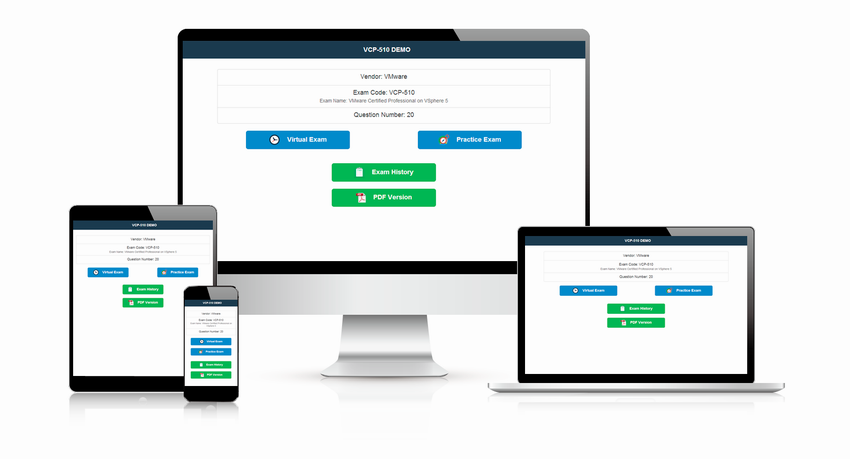
Certification objectives can change, so current preparation matters in 2026. Test4Cram reviews and updates its CT-TAE practice questions for ISTQB Certified Tester Test Automation Engineer, and every purchase includes 365 days of free updates.
Choose Your CT-TAE Study Format
- Printable PDF: prepared by experts, available for instant download, suitable for study anywhere, and supported by 365 days of free updates.
- Desktop Test Engine: installable Windows software with two practice modes, offline access, and an environment that simulates the exam experience.
- Online Test Engine: instant access through major web browsers on Windows, Mac, Android, and iOS, with test history and performance review.
Order Support from Test4Cram
- Security and privacy protection backed by McAfee.
- A free PDF demo is available so you can review the format and quality before purchasing.
- Every purchase includes 365 days of free updates, with renewal available at a 50% discount after expiration.
- Products are delivered by instant download and by email within one minute after payment. Contact customer support if the message does not arrive within two hours.
- There is no restriction on the number of computers where the product can be installed.
ISTQB CT-TAE Exam Overview:
| Certification Vendor: | ISTQB (International Software Testing Qualifications Board) |
|---|---|
| Exam Name: | ISTQB Certified Tester Advanced Level Test Automation Engineering |
| Exam Number: | CTAL-TAE / CT-TAE v2.0 |
| Real Exam Qty: | 40 |
| Exam Price: | Varies by region and provider; approx. USD 200–350 |
| Certificate Validity Period: | Valid for life (no expiration) |
| Related Certifications: | ISTQB Advanced Level Test Analyst (CTAL-TA) ISTQB Certified Tester Foundation Level (CTFL) ISTQB Advanced Level Test Manager (CTAL-TM) ISTQB Advanced Level Technical Test Analyst (CTAL-TTA) |
| Exam Format: | 1–3 points per question, K2 (Understand), K3 (Apply), K4 (Analyze) cognitive levels, Multiple-choice questions |
| Passing Score: | 43 out of 66 points (65%) |
| Available Languages: | Chinese, Polish, French, Spanish, English, Russian, Portuguese, German |
| Exam Duration: | 90 minutes |
| Recommended Training: | Official CTAL-TAE v2.0 Syllabus ISTQB Accredited Training Providers |
| Exam Registration: | BCS (UK) ISTQB Official Site ASTQB (US) iSQI Exam Provider |
| Sample Questions: |  |
| Exam Way: | Online proctored or in-person at authorized test centers |
| Pre Condition: | Must hold valid ISTQB Certified Tester Foundation Level (CTFL) certificate; recommended: 6+ months of practical software testing or development experience |
| Official Syllabus URL: | https://istqb.org/certifications/certified-tester-advanced-level-test-automation-engineering-ctal-tae-v2-0/ |
ISTQB CT-TAE Exam Syllabus Topics:
| Section | Weight | Objectives |
|---|---|---|
| Topic 1: Deployment and Maintenance | 12% | - Handling changes in SUT - Testware maintenance and refactoring - Deployment strategies |
| Topic 2: Introduction to Test Automation | 5% | - Risks and limitations of automation - Roles and responsibilities in automation - Purpose and value of test automation |
| Topic 3: Design of Test Automation Solutions | 11% | - Design for testability - Modular and maintainable design - Test data management |
| Topic 4: Continuous Improvement | 19% | - Integration into CI/CD pipelines - Measuring automation effectiveness - Optimization and improvement cycles |
| Topic 5: Development of Test Automation Solutions | 12% | - Coding standards and best practices - Implementation approaches - Version control and configuration |
| Topic 6: Generic Test Automation Architecture (gTAA) | 14% | - Interfaces and data flow - Layers and components of gTAA - Architecture design principles |
| Topic 7: Test Automation Tools | 15% | - Tool integration and customization - Tool selection and evaluation - Commercial vs open-source tools |
| Topic 8: Verification and Validation | 12% | - Validating automated tests - Defect detection and reporting - Verifying automation infrastructure |
FAQs for ISTQB Certified Tester Test Automation Engineer Candidates
The CT-TAE exam leads to the Certified Tester Advanced Level - Test Automation Engineering certification from ISTQB (International Software Testing Qualifications Board). It is positioned at the Advanced level. The exam validates the knowledge and skills expected of candidates preparing for ISTQB Certified Tester Test Automation Engineer.
Related certifications include:
- ISTQB Certified Tester Foundation Level (CTFL)
- ISTQB Advanced Level Test Manager (CTAL-TM)
- ISTQB Advanced Level Test Analyst (CTAL-TA)
- ISTQB Advanced Level Technical Test Analyst (CTAL-TTA)
The CT-TAE exam includes 40 questions and allows 90 minutes. Before test day, divide the available time by the number of questions in a timed practice set to establish a steady per-question pace. If a difficult item starts consuming too much time, mark it for review and move forward instead of losing momentum. A full timed practice session can help you decide when to move on, when to return, and how much buffer to reserve for a final check.
The passing score for CT-TAE is 43 out of 66 points (65%), and the official exam fee is Varies by region and provider; approx. USD 200–350. Because a retake requires paying the exam fee again, use timed practice results as a readiness check before scheduling your next attempt. If your performance remains inconsistent, continue reviewing weak domains and repeat a timed session before booking the exam.
Must hold valid ISTQB Certified Tester Foundation Level (CTFL) certificate; recommended: 6+ months of practical software testing or development experience
Eligibility rules can change, so confirm the current requirements on the official exam page before registering.
You can register through the official channels listed below:
The available exam delivery method is Online proctored or in-person at authorized test centers.
The official training options include:
After reviewing the recommended training, reinforce what you learned with Test4Cram's 82 practice questions for CT-TAE.
Yes. Test4Cram provides a free PDF demo so you can review the format, question style, and answer quality before placing an order. Your purchase includes 365 days of free updates, and expired products can receive continued update service at a 50% discount.
If you purchase the corresponding CT-TAE preparation material and do not pass that exam within 60 days of purchase, you may apply for a full refund under the 100% Money Back Guarantee. The request requires a scanned exam enrollment slip and the official Score Report PDF, submitted within two days after the exam. Eligible requests are processed within seven days.
Claims are not eligible if the exam was taken within three days of purchase, the product was downloaded without an exam attempt, the order was free or expired, or the candidate name does not match the payer name. If you prefer an exchange instead of a refund, you can receive two free products of equal value while keeping the update service for your original purchase.
Delivery is immediate after checkout. The download is available right away, and the product is also sent to your email within one minute. Contact customer support if it has not arrived within two hours. You may install the product on an unlimited number of computers.
The current CT-TAE outline is organized into 8 top-level domains. The first listed areas include:
- Deployment and Maintenance (12%)
- Generic Test Automation Architecture (gTAA) (14%)
- Test Automation Tools (15%)
Review the Exam Topics section above for the complete outline and any nested subtopics.
ISTQB Certified Tester Test Automation Engineer Sample Questions:
A regression test suite consist of 500 test cases which are all executed manually. The business case for a pilot project is based on the adoption of test automation using a commercial tool that will reduce the execution time by a factor of 90% for 100% of the tests in the regression test suite. The pilot project lasted one month ( as planned) and you are currently its results. At the end of the pilot project, 40% of the regression tests have been automated and their execution time has been reduce by 60%.
Which of the following statements is TRUE in this scenario?
- A. The target defined for the business case seems difficult to hit - it should be realistic
- B. The duration of the pilot project was too short -it should last unit the success factors are achieved
- C. The project selected for the pilot is too critical -if should not be too critical or too trivial
- D. The target defined for the business case is too accurate -it should not be measureable
Correct Answer: A 🗳️
Explanation: Only visible for Test4Cram members. You can sign-up / login (it's free).
Which of the following BEST describes why it is important to separate test definition from test execution in a TAA?
- A. It allows testers to find more defects on the SUT
- B. It allow choosing different paradigms (e.g event-driven) for the interaction TAS and SUT
- C. It allows developing steps of the test process without being closely tied to the SUT interface.
- D. It allows specify test cases without being closely tied to the tool to run them against the SUT
Correct Answer: B 🗳️
Explanation: Only visible for Test4Cram members. You can sign-up / login (it's free).
Consider a TAS that is going to be deployed for the first time. The TAS requires share resources and run it its own test environment. The infrastructure for the TAS has been created along with maintenance procedures. It is very unlikely the TAS will be required to work in other target Environments. There is a high-risk that when the TAS is deployed in its own test environment, a number of existing application will no longer work because of conflicts with the existing shared resources.
Which of the following activities would you expect to be MOST effective at mitigating the risk associated with the first deployment of the TAS?
- A. Testing the TAS for its ability to be implemented in other target test environments.
- B. Testing the TAS for application compatibility issues in the target environment
- C. Testing the TAS for regressions due to optimization that fix non-functional issues.
- D. Testing the TAS for ITS ability to run a shared test environment
Correct Answer: B 🗳️
Explanation: Only visible for Test4Cram members. You can sign-up / login (it's free).
Consider a SUT that small run on multiple platform during the execution of automated test runs. In each test run an automated test suite needs to be executed, with the same version of the TAF, against the same version of the SUT of each platform. Each platform shall have its own dedicated test environment. Your goal is to implement a process as automated as possible ( i.e with minimal manual intervention) that allows implementing a consistent setup of the TAS across the multiple test environments.
Which two of the following aspects are MOST relevant for achieving your goal in this scenario?
A) The configuration of the TAS uses automated installation scripts
B) The TAF saves the logs needed to debug errors in XML format
C) Features of the TAF not used by the automated tests have been tested D) All the automated test cases contain the expected results E) The TAS components are under configuration management
- A. B and c
- B. A and e
- C. B and d
- D. A and d
Correct Answer: B 🗳️
Explanation: Only visible for Test4Cram members. You can sign-up / login (it's free).
Consider the following layers of the gTAA structure:
a. Test generation layer
b. Test definition layer
c. Test execution layer
d. Test execution layer
Consider the following capabilities associated with these layers.
Acquire all the necessary resources before each test and release all after run, in order to avoid interdependences between test Allow the automated test scripts on an abstract level to interact with components, configurations and interfaces of the SUT.
Design test directives that allow configuring the algorithms used to automatically produce the test cases a given model of the SUT.
Allow the definition and implementation of test cases and data by means of templates and/or guidelines.
Which of the following BEST matches each layer with the appropriate capability?
- A. a-3, b-4, c-1, d-2
- B. a-3, b-4, c-2, d-1
- C. a-4, b-3, c-1, d-2
- D. a-4, b-3, c-2, d-1
Correct Answer: B 🗳️
Explanation: Only visible for Test4Cram members. You can sign-up / login (it's free).
Viewing page 1 out of 17 pages.
Viewing questions 1-5 out of 82 questions.