CertNexus Certified Data Science Practitioner : DSP-210

  • Exam Code: DSP-210
  • Exam Name: CertNexus Certified Data Science Practitioner
  • Updated: Nov 21, 2026
  • Q & A: 0 Questions and Answers

We are already working hard to make DSP-210 exam material available to our valued customers. If you are interested in DSP-210 exam material, provide us your email and we will notify you.

About CertNexus DSP-210 Exam Cram

Hundreds of questions are hard to memorize by reading alone. The Test4Cram PC and online test engines turn the DSP-210 question bank into interactive, exam-like simulations — the smartest way to internalize 0 practice questions for the CertNexus Certified Data Science Practitioner exam before 2026 test dates fill up.

CertNexus DSP-210 Exam Overview:
Certification Vendor:CertNexus
Exam Name:CertNexus Certified Data Science Practitioner (CDSP)
Exam Number:DSP-210
Exam Duration:120 minutes
Real Exam Qty:90 (75 scored)
Exam Format:Single-response, Multiple-choice, Online via Pearson OnVUE or in person at Pearson VUE test centers, Proctored exam
Related Certifications:Certified Data Science Practitioner (CDSP)
Available Languages:English
Passing Score:69% or 72%, depending on exam form
Exam Price:USD 367.50
Exam Way:Online proctored examination through Pearson OnVUE or in person at Pearson VUE test centers. The 120-minute duration includes time for the candidate agreement and exam instructions.
Pre Condition:No formal prerequisites or eligibility verification are required. Recommended background includes working knowledge of Python and R, querying languages, statistics, linear algebra, data visualization, communication, and responsible data use.
Official Syllabus URL:https://certnexus.com/wp-content/uploads/2025/02/CDSP-blueprint_final-v1.6.pdf
CertNexus DSP-210 Exam Syllabus Topics:
SectionWeightObjectives
Topic 1: Operationalizing the Pipeline5-8%- Finalize and Implement the Data Science Pipeline
  • 1. Implement production pipelines and integrate models into applications
    • 2. Test, monitor, and maintain operationalized models and pipelines
      • 3. Prepare models and pipeline components for deployment
        Topic 2: Communicating Findings4-7%- Communicate Results
        • 1. Explain data-driven recommendations to technical and non-technical audiences
          • 2. Present analytical findings and model results to stakeholders
            • 3. Communicate insights using appropriate visualizations and reports
              Topic 3: Testing Models4-7%- Evaluate Model Performance
              • 1. Select appropriate evaluation metrics
                • 2. Interpret evaluation results and identify model limitations
                  • 3. Assess model performance and generalization
                    Topic 4: Defining the Need to Be Addressed Through the Application of Data Science7-9%- Classify a Question into a Known Data Science Problem
                    • 1. Identify structured, unstructured, image, text, numerical, and categorical data
                      • 2. Select appropriate modeling approaches, including recommender systems
                        • 3. Identify optimization, forecasting, regression, classification, and clustering problems
                          - Identify the Project Scope
                          • 1. Determine project timelines and limitations
                            • 2. Identify project specifications, objectives, metrics, KPIs, and stakeholder requirements
                              • 3. Identify mandatory and optional deliverables
                                - Understand Challenges
                                • 1. Understand project terminology, milestones, proof of concept, and minimum viable product
                                  • 2. Obtain data access permissions and establish informed consent
                                    • 3. Understand data privacy, security, governance, and regulatory requirements
                                      Topic 5: Performing Exploratory Data Analysis25-36%- Explore Data Distributions
                                      • 1. Analyze distributions and statistical characteristics
                                        • 2. Investigate relationships and correlations among variables
                                          - Use Visualizations to Analyze Data
                                          • 1. Select appropriate data visualization techniques
                                            • 2. Interpret charts, graphs, and statistical visualizations
                                              - Examine Data
                                              • 1. Identify patterns, relationships, anomalies, and outliers
                                                • 2. Inspect data structures, types, distributions, and summary statistics
                                                  - Preprocess Data
                                                  • 1. Prepare and transform data for modeling
                                                    • 2. Apply appropriate encoding, normalization, and feature preparation techniques
                                                      Topic 6: Extracting, Transforming, and Loading Data17-25%- Gather Data Sets
                                                      • 1. Read data and query SQL and NoSQL databases
                                                        • 2. Identify first-party, second-party, and third-party data sources
                                                          • 3. Collect open-source data, use APIs, and scrape websites
                                                            • 4. Read and write data using cloud storage solutions
                                                              • 5. Generate dummy, randomized, anonymized, and synthetic data
                                                                - Merge and Load Data Sets
                                                                • 1. Export cleaned data sets and load data into visualization tools
                                                                  • 2. Join data from different sources using common keys and unique identifiers
                                                                    • 3. Load data into databases and data frames
                                                                      - Clean Data Sets
                                                                      • 1. Identify, assess, and mitigate data and machine learning bias
                                                                        • 2. Use exploratory analysis to detect anomalies and assess data quality
                                                                          • 3. Apply data auditing, provenance tracking, and governance practices
                                                                            • 4. Parse data, correct formats, and deduplicate records
                                                                              • 5. Identify and correct nulls, duplicates, outliers, irregularities, and corrupted values
                                                                                Topic 7: Building Models19-27%- Develop Clustering Models
                                                                                • 1. Evaluate clustering approaches
                                                                                  • 2. Train and tune clustering models
                                                                                    - Test a Hypothesis
                                                                                    • 1. Formulate hypotheses and select suitable statistical techniques
                                                                                      • 2. Interpret statistical results and relationships
                                                                                        - Develop Classification Models
                                                                                        • 1. Select features and evaluate classification approaches
                                                                                          • 2. Train and tune classification models
                                                                                            - Identify Machine Learning Concepts
                                                                                            • 1. Select appropriate algorithms and modeling approaches
                                                                                              • 2. Understand supervised and unsupervised learning
                                                                                                - Develop Regression Models
                                                                                                • 1. Evaluate regression approaches
                                                                                                  • 2. Train and tune regression models

                                                                                                    Your CertNexus Certified Data Science Practitioner Exam Questions Answered

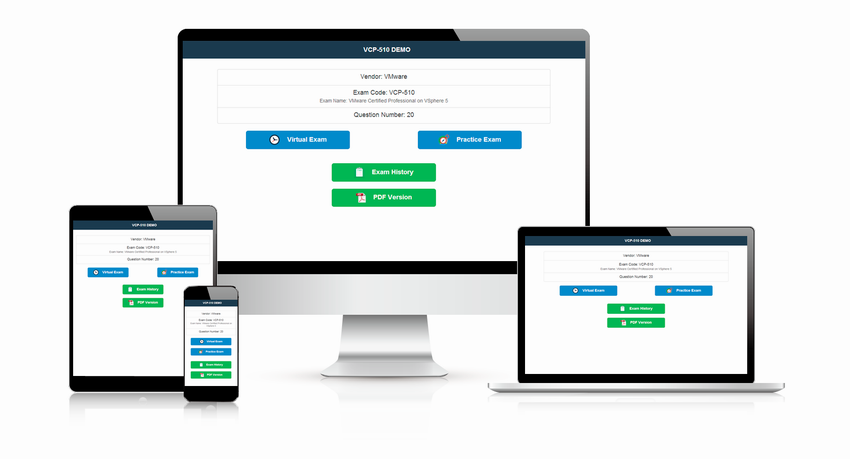
                                                                                                    There is, and we recommend it. Test4Cram posts a free demo of the CertNexus Certified Data Science Practitioner questions on the product page — download it or leave your email and we will send it over. Buying includes 365 days of free updates; when that year runs out, you can extend the update service at a 50% discount from your member zone.

                                                                                                    The passing mark for the CertNexus Certified Data Science Practitioner exam is 69% or 72%, depending on exam form, and one attempt costs USD 367.50. Retakes are charged at full price again, so walking in underprepared is an expensive mistake. A practical safeguard: rehearse with Test4Cram practice questions until your timed mock scores clear 69% or 72%, depending on exam form with room to spare, then book the real DSP-210 exam.

                                                                                                    CertNexus structures the CertNexus Certified Data Science Practitioner exam around 7 domains. The heaviest hitters are Performing Exploratory Data Analysis (25-36% of the exam), Defining the Need to Be Addressed Through the Application of Data Science (7-9% of the exam), Testing Models (4-7% of the exam). Start your revision where the weight is, and scroll up to the outline section on this page for the complete topic list.

                                                                                                    The DSP-210 exam is the official CertNexus assessment that awards the CertNexus Certification certification — a credential at the Practitioner level. Passing it proves vendor-validated skills that employers actively look for. It belongs to a broader track that includes Certified Data Science Practitioner (CDSP), making it a solid anchor for further certifications.

                                                                                                    Delivery first: your DSP-210 product downloads instantly, and a copy reaches your email within one minute of payment. Nothing after 2 hours (spam folder checked)? Contact our online service and we will resolve it at once. Install limits do not exist — use as many computers as you like. On refunds: if you sit the corresponding DSP-210 exam within 60 days of purchase and fail, you qualify for a full refund. File the claim within 2 days after the exam with a scanned enrollment slip and the official Score Report PDF; processing completes within 7 days. The guarantee excludes attempts made within 3 days of purchase, downloads never used in an actual exam, free materials, and expired orders, and the candidate name must match the payer name. Rather keep studying? Swap your product for two free exam products of equal value — your original purchase keeps its update service either way.

                                                                                                    Expect 90 (75 scored) questions within 120 minutes on the CertNexus Certified Data Science Practitioner exam. Divide the two and the pace is unforgiving — there is little slack for second-guessing. Build speed deliberately: run full-length timed sessions in the Test4Cram test engine, practice marking hard questions for review, and treat every mock as a dress rehearsal for the real DSP-210 exam.

                                                                                                    No formal prerequisites or eligibility verification are required. Recommended background includes working knowledge of Python and R, querying languages, statistics, linear algebra, data visualization, communication, and responsible data use. Because CertNexus can revise these requirements, verify the current rules on the official exam page — https://certnexus.com/wp-content/uploads/2025/02/CDSP-blueprint_final-v1.6.pdf — before scheduling your CertNexus Certified Data Science Practitioner exam.

                                                                                                    What Clients Say About Us

                                                                                                    LEAVE A REPLY

                                                                                                    Your email address will not be published. Required fields are marked *

                                                                                                    Quality and Value

                                                                                                    Test4Cram Practice Exams are written to the highest standards of technical accuracy, using only certified subject matter experts and published authors for development - no all study materials.

                                                                                                    Tested and Approved

                                                                                                    We are committed to the process of vendor and third party approvals. We believe professionals and executives alike deserve the confidence of quality coverage these authorizations provide.

                                                                                                    Easy to Pass

                                                                                                    If you prepare for the exams using our Test4Cram testing engine, It is easy to succeed for all certifications in the first attempt. You don't have to deal with all dumps or any free torrent / rapidshare all stuff.

                                                                                                    Try Before Buy

                                                                                                    Test4Cram offers free demo of each product. You can check out the interface, question quality and usability of our practice exams before you decide to buy.